
SEO, GEO, and AEO: What They Are and What They Are Used For in 2026
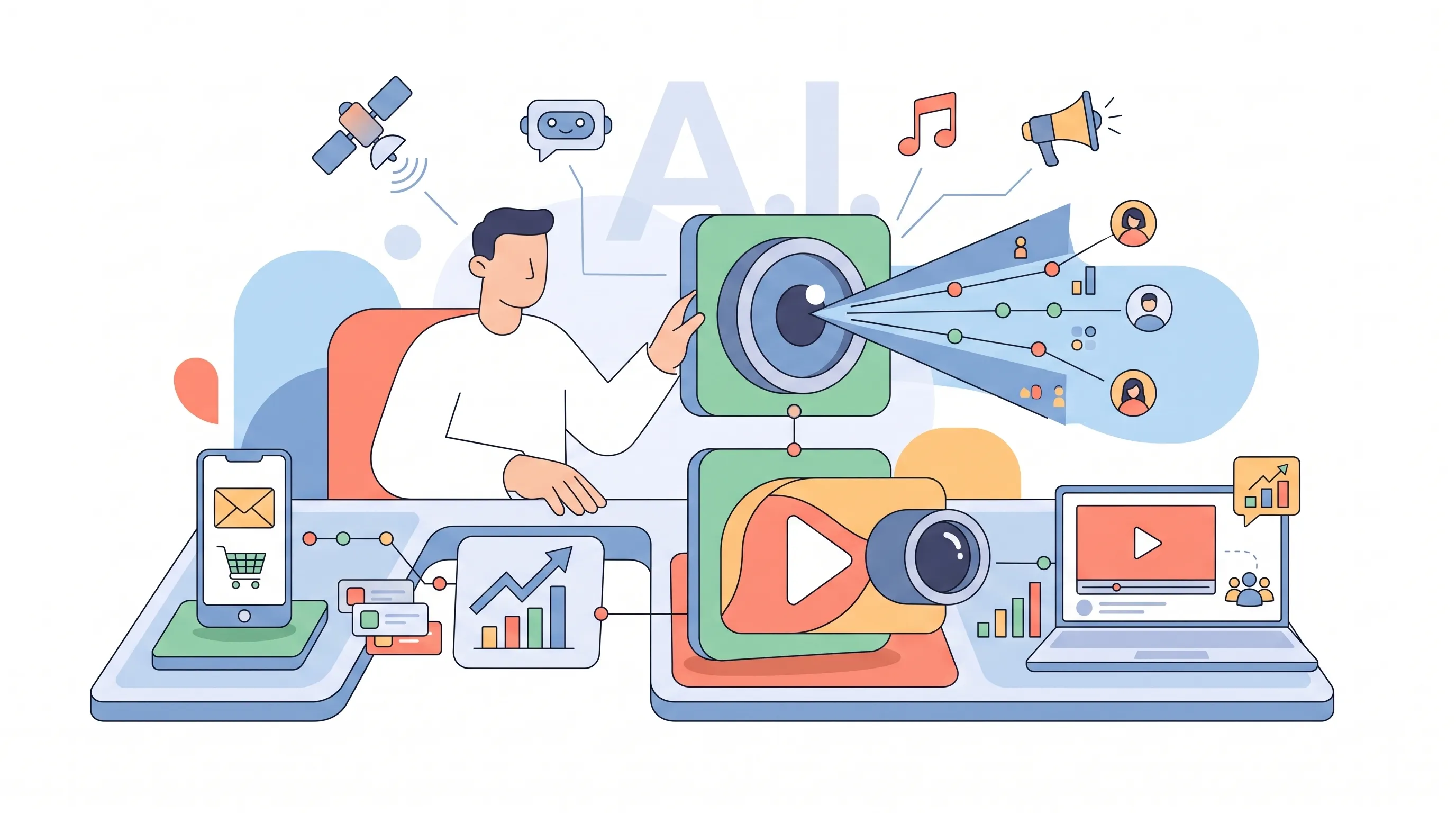
The digital search ecosystem has underwent the most dramatic transformation in its history. What for over two decades was simply known as the struggle to appear in Google's top ten blue results has today become a multidimensional discipline. In today's 2026 digital environment, artificial intelligence has completely reconfigured the way users search for, process, and consume information on the internet.
Optimizing meta tags and acquiring backlinks is no longer enough to rank a website. Today, digital marketing professionals and businesses must master three fundamental pillars that coexist and complement each other: SEO (Search Engine Optimization), GEO (Generative Engine Optimization), and AEO (Answer Engine Optimization). Understanding what these three methodologies are, how they differ, and what they are used for is the ultimate key to guaranteeing visibility, relevance, and qualified traffic in 2026.
Table of Contents
- The evolution of the search ecosystem: From link engines to answer and generative engines
- 1. What is SEO in 2026 and why is it still irreplaceable?
- 2. What is GEO (Generative Engine Optimization)?
- 3. What is AEO (Answer Engine Optimization)?
- SEO vs. GEO vs. AEO: Comparative table of key differences
- What are SEO, GEO, and AEO used for in 2026? Their impact on digital business
- Implementation guide: How to optimize your website for SEO, GEO, and AEO step by step
- Conclusion: The future of search is total integration
The evolution of the search ecosystem: From link engines to answer and generative engines
To understand the current state of search engine marketing, it is essential to analyze how we got here. Historically, a search engine functioned as a giant index: the user entered a keyword phrase, the algorithm crawled the web, and returned a list of links ordered by relevance and authority.
However, the consolidation of large language models (LLMs) and the deep integration of artificial intelligence into platforms like Google Gemini, ChatGPT Search, Perplexity, and Bing Copilot have changed the rules of the game. Users no longer search solely using isolated words; they perform complex, conversational, and contextual queries. They expect immediate answers, syntheses of multiple sources, and real-time interactions.
This new paradigm has given rise to a strategic division that every marketing consultant or team must manage:
1. What is SEO in 2026 and why is it still irreplaceable?
Despite recurring claims about "the death of SEO," the reality in 2026 proves quite the opposite: SEO is not dead, but has evolved toward a much more rigorous technical and strategic standard. SEO remains the backbone of any digital architecture, since without an easily crawlable, fast, and structured site, neither **artificial intelligence** nor answer engines will be able to process your content.
Traditional web positioning work continues to be indispensable for capturing traffic with high transactional and navigational intent. When a user wants to access a specific platform, compare prices in real time, or make a direct purchase, the traditional search engine remains the primary gateway.
The pillars of current SEO
In 2026, SEO rests on four fundamental pillars:
2. What is GEO (Generative Engine Optimization)?
The term GEO, or Generative Engine Optimization, represents digital marketing's direct response to search engines powered by generative AI. When a user makes a query in an interface like SearchGPT, Perplexity, or Google's AI Overviews, the tool does not return a list of websites; instead, it drafts an original text in real time gathering information extracted from various sources across the web.
The goal of GEO is to ensure that your content, data, products, or brand are selected as primary sources during the AI synthesis phase, ensuring that the model explicitly cites you and places a direct link to your website within its generated response.
How do generative engines decide who to cite?
Unlike traditional algorithms that mainly weigh factors such as backlinks and keyword density, generative engines evaluate content based on natural language processing (NLP) principles:
3. What is AEO (Answer Engine Optimization)?
AEO, or Answer Engine Optimization, is the discipline focused on structuring information so that answer engines (such as voice assistants, Google featured snippets, Siri, Alexa, and chatbot integrations) can offer a direct, immediate, and precise solution to a specific user question.
In today's 2026 context, AEO plays a critical role due to the rise of "Zero-Click" searches (searches without a click), where the user answers their query directly within the search interface without needing to navigate to any website. Although at first glance this might seem like a loss of traffic, AEO is the key strategic channel for capturing brand awareness, top-of-funnel (TOFU) search intent, and positioning on mobile and home devices.
Key elements of the AEO strategy
To successfully implement an AEO strategy on your digital platform, it is necessary to focus on the following aspects:
SEO vs. GEO vs. AEO: Comparative table of key differences
To clearly visualize how these three methodologies interact in practice, let's observe the following technical comparison:
What are SEO, GEO, and AEO used for in 2026? Their impact on digital business
Integrating these three dimensions into a single digital marketing strategy is not a luxury option, but a commercial survival necessity. Working on SEO, GEO, and AEO together makes it possible to cover the entire consumer journey (*Customer Journey*), from initial discovery to final conversion.
1. Capturing traffic in all stages of the sales funnel
Let's imagine a client looking to solve a technical need in their business. Their search process in 2026 follows this pattern:
2. Protecting market share in the zero-click era
As an increasing percentage of searches are resolved through generative syntheses or direct answers on the home screen, websites that rely solely on traditional SEO traffic experience a progressive decline in informational visits. However, if that same business implements GEO and AEO, it does not lose visibility: it becomes the authority cited by the artificial intelligence itself, maintaining its brand presence and driving only the highest commercial value traffic to its site.
3. Maximizing results in complex transactional projects
In highly competitive industries like e-commerce, where managing an online store requires constantly attracting highly qualified users, integrating these three variables makes the difference between success and irrelevance. Today's users ask generative engines to find "the best running shoes for marathons if I have overpronation and a budget under 150 dollars." A well-structured catalog with Schema markup (AEO), backed by detailed analyses and expert reviews (GEO), and hosted on an ultra-fast website (SEO), will absolutely dominate AI recommendations and subsequent sales.
Likewise, the organic presence derived from working on SEO, GEO, and AEO generates a direct synergistic effect on paid acquisition strategies, reducing the overall Cost per Acquisition (CPA) when combined with strategic google advertising campaigns.
Implementation guide: How to optimize your website for SEO, GEO, and AEO step by step
To adapt your company's digital presence to the requirements of 2026, we suggest following a roadmap structured in four fundamental phases:
Step 1: Audit and strengthen the Technical SEO baseline
Before attempting to entice generative artificial intelligences, you must ensure your technical platform has no basic shortcomings:
- Optimization of Core Web Vitals and performance: Guarantee ultra-fast loading speeds (LCP, INP, and CLS metrics in optimal range) to offer a smooth experience and prevent user abandonment.
- Guaranteed crawlability and indexability: Review the configuration of the
robots.txtfile, XML sitemaps, and JavaScript rendering to ensure that both traditional bots and AI crawlers can process your site without restrictions. - Web architecture and internal linking: Organize the site structure through a logical URL hierarchy and an internal link network that strategically transfers authority to key pages.
Step 2: Implement advanced Schema.org semantic markup
Structured code is how we unequivocally translate human language into machine language:
- Integration of priority schemas: Implement structured data in JSON-LD format using typologies such as
FAQPage,Article,Product,Organization,HowTo, andSpeakable. - Establishing relationships between entities: Use advanced properties such as
sameAsandaboutto connect your brand, authors, and services with global authority sources and external wikis. - Continuous validation and monitoring: Periodically audit your tags with official rich results testing tools to detect syntax errors or missing required fields.
Step 3: Redesign the content strategy for GEO optimization
Transform generic blog posts into high-information-density assets:
- Incorporation of primary data and sources: Add verifiable statistics, original studies, direct expert quotes, and proprietary research that serve as high-value evidence for AI syntheses.
- Specialized vocabulary and semantic interconnection: Structure the text with precise definitions, industry terminology, and deep conceptual explanations to facilitate Natural Language Processing (NLP).
- Explicit demonstration of E-E-A-T: Sign your content with verified author profiles, include references to real success stories, and demonstrate practical and indisputable experience on the topic addressed.
Step 4: Adopt a conversational writing approach (AEO)
Facilitate the extraction of short direct answers for assistants and chatbots:
- Q&A format structures (Question and Answer): Head your sections with the exact questions the audience asks and answer them immediately in the first paragraph with concise statements (between 40 and 60 words).
- Use of lists, tables, and sequential steps: Organize key information using bulleted lists, numbered lists, and comparative tables that answer engines can easily extract and integrate into Featured Snippets.
- Natural and direct tone for voice searches: Write with oral communication and immediate user intent in mind, prioritizing resolving the specific question before expanding on background context.
Conclusion: The future of search is total integration
In the digital marketing and communication landscape of 2026, there is no dilemma between choosing SEO, GEO, or AEO. The key to success lies in understanding that they are not mutually exclusive disciplines, but complementary layers of a single online visibility strategy.
SEO guarantees technical infrastructure, indexability, and capturing direct transactional traffic. GEO positions your brand within the analytical brain of artificial intelligence, making your company the recommended option when users make complex research queries. Meanwhile, AEO ensures that your business responds with instant precision to specific consumer questions on any channel or device.
Brands and businesses that adopt this holistic approach today will not only maintain their traffic levels, but will also dominate the new era of digital search with authority and a return on investment far superior to those of their competitors.