
Conversion Funnels for eCommerce
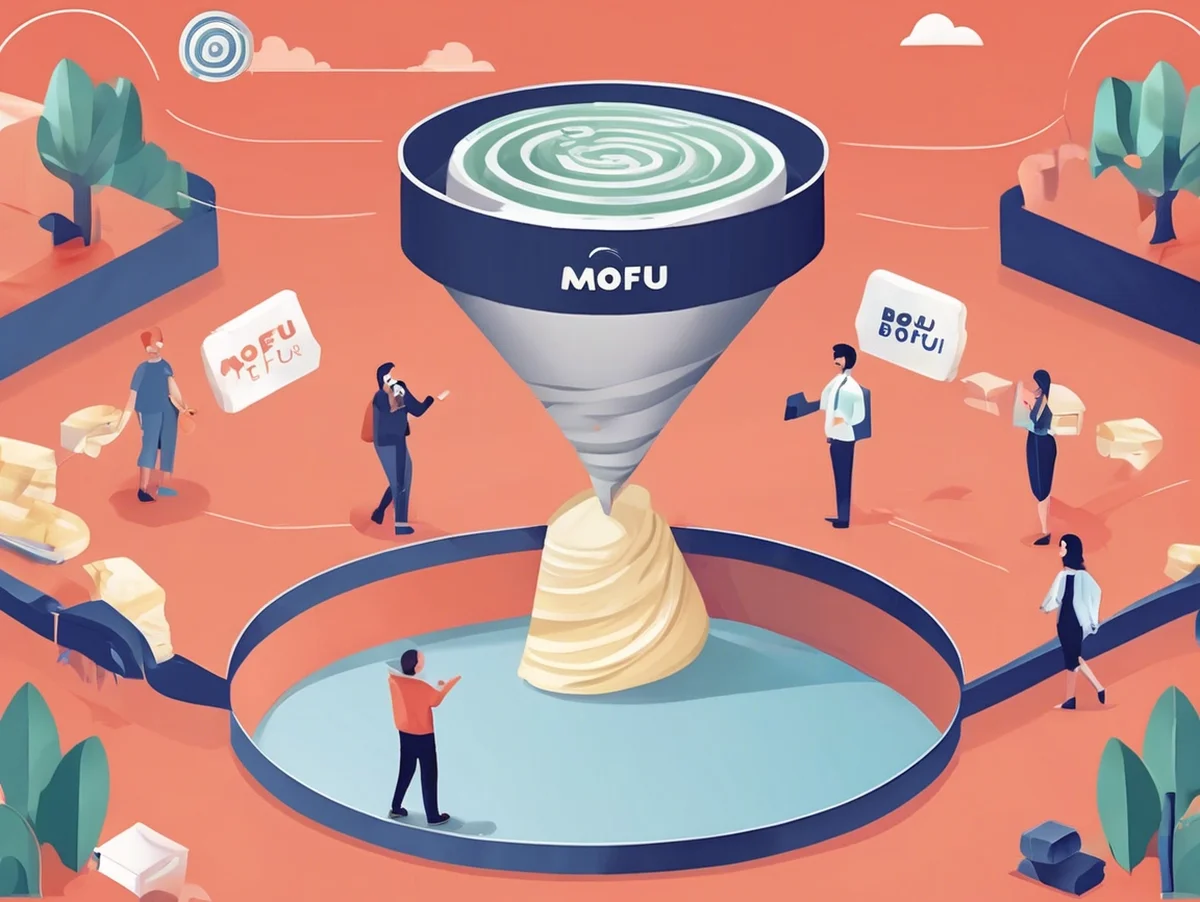
Table of Contents
- What is a Conversion Funnel and How to Optimize It in 2026?
- Prior Strategy: Objectives, Buyer Persona, and Value Proposition for Your Funnel
- The 3 Essential Stages of the Conversion Funnel (TOFU, MOFU, BOFU)
- TOFU Stage: Attraction and Building Brand Awareness
- MOFU Stage: Consideration, Lead Generation, and Building Trust
- BOFU Stage: Final Conversion, Closing Sales, and Retention
What is a Conversion Funnel and How to Optimize It in 2026?
Every online business needs a structured process to guide its visitors from the first interaction to the final purchase. This is where conversion funnels or sales funnels play a decisive role. In today's digital environment of 2026, mastering this concept is essential to maximizing the profitability of any marketing strategy.
How do you transform anonymous users into recurring, loyal customers?
Depending on your business goals—whether it's capturing a user's email, driving resource downloads, scheduling appointments, or closing direct sales on an e-Commerce site—users will pass through different progressive stages until they complete the desired action.
This strategic journey composed of different phases is what we know as a conversion funnel.
By implementing and optimizing a sales funnel in 2026, you not only significantly reduce your Customer Acquisition Cost (CAC), but you also increase Customer Lifetime Value (LTV) through advanced automation and hyper-personalization.
Prior Strategy: Objectives, Buyer Persona, and Value Proposition for Your Funnel
1. Defining Clear Objectives
Before designing the stages of your conversion funnel, you must set quantifiable goals (KPIs), identify your ideal customer, and formulate an irresistible value proposition that meets current market demands.
2. In-Depth Understanding of Your Ideal Customer (Buyer Persona)
To sell successfully in 2026, you need to understand exactly who you are targeting. Creating a detailed Buyer Persona profile allows you to validate whether your offer solves a real user need.
Even if you believe you have the perfect product, consumers need to clearly understand why your solution is the best choice compared to market alternatives.
3. The Value of Customer Acquisition and Retention
Throughout the journey from product discovery to purchase and post-sale satisfaction, the funnel represents the strategic effort and investment required to guide the user. It is the cost associated with converting and retaining a customer.
A well-optimized funnel architecture consolidates a constant stream of customer acquisition organically and automatically.
To successfully move users between each level, it is essential to integrate modern copywriting, web analytics, and marketing automation techniques.
4. Value Statement and Unique Selling Proposition (USP)
With your target market insights in hand, the next step is to articulate a clear value statement along with your Unique Selling Proposition (USP).
The value statement synthesizes the main benefit the user will experience when purchasing your product or service.
On the other hand, the unique selling proposition highlights the innovative, differentiating feature that makes your brand superior to the competition.
The 3 Essential Stages of the Conversion Funnel (TOFU, MOFU, BOFU)
Structurally, an effective sales funnel is divided into three main phases:
- TOFU (Top of the Funnel): The top of the funnel, focused on attraction and brand awareness (Awareness).
- MOFU (Middle of the Funnel): The middle, oriented toward consideration, evaluation, and lead generation.
- BOFU (Bottom of the Funnel): The bottom, focused on conversion, sales, and loyalty.
Specific digital marketing tactics must be applied at each level to ensure the user progresses seamlessly through the purchasing decision process.

TOFU Stage: Attraction and Building Brand Awareness
The TOFU phase focuses on brand recognition (Awareness) and attracting the largest possible number of qualified potential customers.
At this point, the main goal is to capture user attention across multiple channels: search engine SEO positioning, social media ad campaigns, and omnichannel content.
Keep in mind that during this phase, the user identifies a need or problem and seeks information. The best strategy to capture them is Inbound Marketing and creating high-quality informative content.
Having an optimized blog that directly addresses user search intent allows you to generate qualified traffic and position your company as an authority in its industry.
Complementary strategies such as paid ads, social media, e-mail marketing, and omnichannel initiatives are key in this first touchpoint to capture the target audience's attention.
MOFU Stage: Consideration, Lead Generation, and Building Trust
When the user moves past the initial phase and enters the middle stage of the funnel (MOFU), they transition to the consideration phase. Here, they already know your brand and are evaluating whether your solutions fit their needs.
The goal in this phase is to obtain their contact details to convert them into a qualified lead. To achieve this, conveying trust and credibility is essential, especially in conversion funnels for e-Commerce and digital businesses.
It is vital to guarantee a seamless browsing experience, clear web architecture, and visible security protocols.
During the MOFU stage, intensive retargeting strategies, lead nurturing through automated email marketing, and personalized value offers are applied.
Among the most effective resources for lead generation are Lead Magnets, interactive forms, tripwires, and exclusive discounts in exchange for key user information (First-Party Data).
BOFU Stage: Final Conversion, Closing Sales, and Retention
The bottom stage of the funnel represents the decisive moment of conversion and purchase. The user has moved past attraction (TOFU) and evaluation (MOFU), and is ready to make a purchasing decision.
At this point, direct sales strategies, testimonials, free trials, and persuasive email marketing sequences must finalize the transaction.
Once the sale is completed, the strategy doesn't end. The next strategic goal is to drive repeat purchases and maximize retention, given that retaining an existing customer is significantly more profitable than acquiring a new one.
For online stores and service companies, it is essential to implement automated abandoned cart recovery systems, cross-selling campaigns, and personalized loyalty programs.
Optimizing the conversion funnel in 2026 requires adapting each phase to the specifics of your business model. There is no one-size-fits-all funnel; every company must structure its funnels based on its specific business goals.
If you want to implement high-performance conversion funnels for your business or online store, feel free to contact us. Our team of specialists will design the ideal strategy to grow your sales while you focus on scaling your business.